From Data to Direction: Using Community Surveys as a Roadmap to Wellness and Wealth Creation
A well-designed community survey is far more than a data collection exercise. When done right, it becomes the foundation for a community-driven roadmap — one that aligns leadership priorities, unlocks funding, and sets the conditions for lasting community wellness.
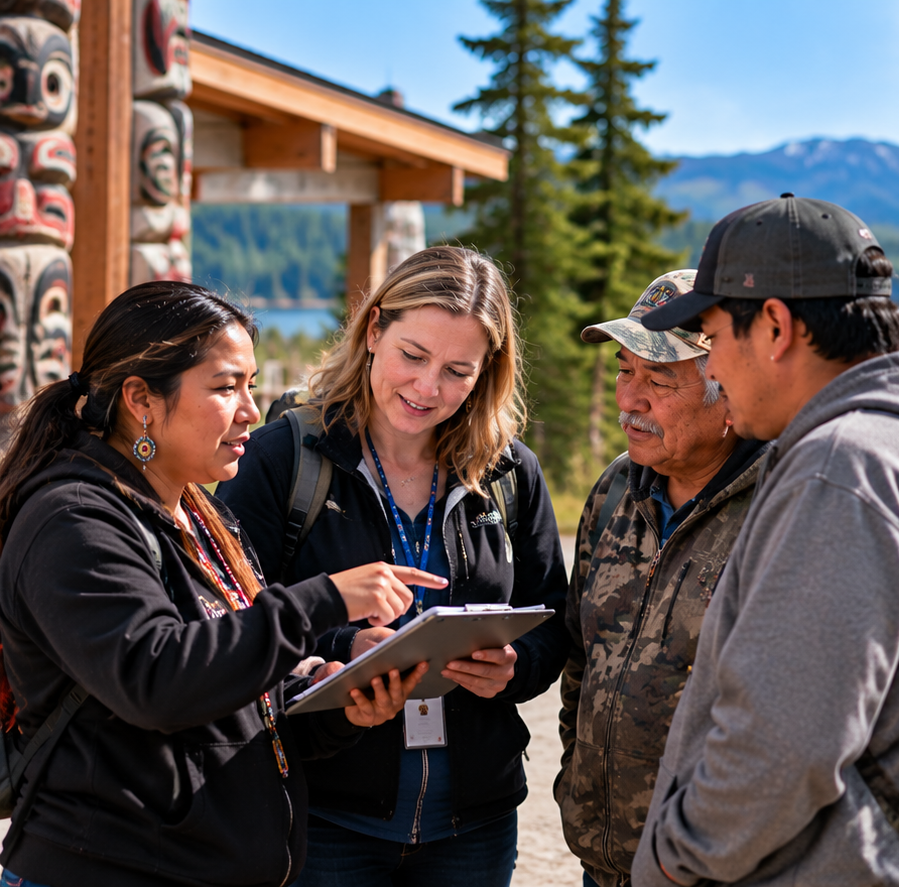
From Data to Direction: Using Community Surveys as a Roadmap to Empowerment and Wealth Creation
For many Indigenous communities, the gap between where they are and where they want to be is not a lack of vision — it is a lack of evidence. Funders want data. Governments want needs assessments. Investors want feasibility studies. And community members want to know that their voices are shaping the decisions that affect their lives.
A comprehensive community survey, designed and executed with cultural integrity, closes that gap. It transforms lived experience into documented evidence, and documented evidence into a strategic roadmap for empowerment and wealth creation.
Why Surveys Matter More Than Ever
The landscape of Indigenous funding and economic development has shifted significantly over the past decade. Federal and provincial programs increasingly require communities to demonstrate need through quantitative data, not just narrative. Impact assessments, housing strategies, health plans, and economic development proposals all depend on a credible baseline of community information.
Without that baseline, communities are left reacting — applying for whatever funding is available rather than pursuing the priorities their members have actually identified. A rigorous community survey changes that dynamic entirely. It puts the community in the driver's seat.
What a Comprehensive Survey Actually Captures
Not all surveys are created equal. A surface-level questionnaire distributed at a band meeting captures a fraction of the picture. A truly comprehensive community survey is designed to gather information across every dimension of community life:
Demographics and household composition — Who lives in the community? What are the age distributions, family structures, and residency patterns? This data drives housing needs assessments, school planning, and elder care projections.
Economic participation and employment — What is the current employment rate? Where are community members working, and in what sectors? What barriers prevent greater participation in the local and regional economy? These findings directly inform workforce development strategies and business case development.
Health and wellness indicators — What chronic conditions are most prevalent? What mental health and addictions supports are needed? What barriers exist to accessing care? Health survey data is foundational to securing funding under federal Indigenous health frameworks.
Education and training gaps — What credentials do community members hold? What training opportunities are most in demand? Where are the gaps between available programming and community aspirations? This data supports post-secondary partnerships, trades training proposals, and credential advancement initiatives.
Housing conditions and infrastructure — How many units are overcrowded? What is the state of existing housing stock? What infrastructure investments are most urgently needed? Housing and infrastructure surveys are prerequisites for CMHC, ISC, and provincial capital funding applications.
Cultural priorities and language vitality — What cultural programs and language revitalization efforts are most valued? What resources are needed to sustain them? This data supports Heritage Canada and Indigenous Languages Act funding streams.
Economic development aspirations — What business opportunities do community members want to pursue? What sectors align with community values and land-based strengths? What governance structures are needed to support economic ventures? These findings become the backbone of a community economic development strategy.
Turning Survey Results Into a Strategic Roadmap
Data without direction is just a report that sits on a shelf. The real value of a comprehensive community survey lies in what happens after the data is collected — the process of translating findings into a prioritized, actionable roadmap.
Step 1: Community validation. Before any strategy is developed, survey findings must be brought back to the community. Town halls, elder circles, and youth forums allow members to confirm that the data reflects their experience, identify any gaps, and begin to articulate priorities. This step is not optional — it is what separates a community-owned strategy from a consultant-driven one.
Step 2: Priority mapping. With validated data in hand, leadership and community members work together to identify the highest-leverage priorities — the areas where investment will generate the greatest improvement in quality of life and the strongest foundation for economic growth. Typically, these cluster around housing and infrastructure, economic development, health and wellness, and education and training.
Step 3: Opportunity identification. Survey data reveals not just needs but assets. A community with a high proportion of young adults has a workforce development opportunity. A community with strong cultural programming has a heritage tourism opportunity. A community with significant natural resources has an environmental stewardship and revenue-sharing opportunity. The roadmap must capture both the gaps to be addressed and the strengths to be leveraged.
Step 4: Funding alignment. Every priority identified in the roadmap can be matched to one or more funding streams. Housing gaps align with CMHC and ISC capital programs. Workforce development priorities align with ESDC and provincial training funds. Economic development aspirations align with Indigenous economic development funds, ISED programs, and impact benefit agreement negotiations. A well-structured roadmap becomes a funding strategy in its own right.
Step 5: Governance and accountability structures. A roadmap without accountability is a wish list. The final step is establishing the governance structures — committees, reporting frameworks, performance indicators — that will ensure the roadmap is implemented, monitored, and updated as conditions change.
The Link Between Surveys and Wealth Creation
It is worth being direct about the connection between community surveys and economic empowerment. Wealth creation in Indigenous communities does not happen by accident. It happens when communities have the evidence to make the case for investment, the strategy to direct that investment toward high-priority opportunities, and the governance capacity to manage the resulting economic activity.
A comprehensive community survey is the starting point for all three. It provides the evidence base. It informs the strategy. And it builds the internal capacity — through the process of community engagement itself — that governance requires.
Communities that have invested in rigorous survey and research processes consistently report stronger funding outcomes, more coherent economic development strategies, and greater community confidence in leadership decisions. The survey is not just a tool for capturing where a community is today. It is the first step toward defining where the community intends to be tomorrow.
How OpulenCare Approaches Community Surveys
At OpulenCare, our community survey and research practice is built on three principles: cultural integrity, methodological rigour, and community ownership.
We design survey instruments in close collaboration with community leadership and knowledge keepers, ensuring that the questions asked reflect community priorities — not external assumptions. We deploy mixed-method approaches that combine quantitative data collection with qualitative community dialogue, capturing both the numbers and the stories behind them. And we deliver findings in formats that are accessible to community members, not just technical reports for government files.
Most importantly, we do not walk away when the data is collected. We stay engaged through the roadmap development process, supporting communities to translate their survey findings into funded strategies and implemented projects.
If your community is ready to build the evidence base for its next chapter, we are ready to help.
OpulenCare provides comprehensive community survey design, data collection, analysis, and strategic roadmap development for Indigenous communities across Canada. Contact us to learn more.